
 |
 |
 |
 |
 |
 |
 |
 |
|
||||||||||
|
||||||||||
Introduction:
Conveners:
Märt Läänemets
mart_laanemets@yahoo.com
Chipamong Chowdhury
chidhamma@gmail.com
Thursday, 23 May
9:30–10:00 Registration (University of Tartu Library Lobby Hall)
10:00–10:10 Opening speech by Märt Läänemets
10:10–10:45 Key note speech by Chipamong Chowdhury (Bhikkhu Revata Dhamma), University of Tartu, Centre for Oriental Studies
Buddhism Transformed: Exploring Baltic Buddhist Identities and Traditions
11:00–12:30 First Panel: Historical Dimensions, moderator Märt Läänemets
11:00–11:20 Alpo Ratia, University of Helsinki, Department of World Culture
M. A. Castrén’s Notices on Buryat Buddhism. A Finnish linguist and ethnographer in the Transbaikal (1847–1848)
11:20–11:40 Mait Talts, Tallinn University of Technology
Karlis A. M. Tennisons and Friedrich V. Lustig – first ‘practicing’ Buddhists in Estonia
11:40-12:00 Terje Toomistu, Doctoral Candidate, University of Tartu
Hippie Dharma in Soviet Estonia
12:00–12:30 Discussion
12:30–12:50 Coffee break
12:50–14:00 Second Panel: Buddhism in Practice: Teachers, Groups and Congregations, moderator Anita Stasulane
12:50–13:10 Marika Laudere, Daugavpils University
Buddhism in Modern Latvia
13:10–13:30 Lauri Liiders, Doctoral Candidate, University of Tartu
Triratna Buddist Community: a case study of a Buddhist congregation in Estonia
13:30–13:50 Natalia Munatajeva, Society of Himalayan Cultures/Tallinn University
Improvisation within Traditional Frames: Visiting Teachers Experiences of Transmitting Meditation Practice for Non-Buddhists
13:50–14:20 Discussion
14:20–15:20 Lunch
15:20–16:50 Third Panel: Buddhism Transformed: Challenges and/or Compromises, moderator Mait Talts
15:20–15:40 Anita Stasulane, Daugavpils University, Faculty of Humanities
The Paradigm of Religious Conversion: Latvian Buddhists
15:40–16:00 Marko Lepik, Independent Researcher (MA Tartu, MSc London/LSE)
An agnostic treatment of Buddhism: The obligation and opportunity of the Nordic seculars
16:00–16:20 Leho Rubis, artist and art teacher
How the Buddha looks today?
16:20–16:50 Discussion
16:50–17:10 Coffee break
17:10–19:15 Film, “Enlightenment Guaranteed” (2002, 109 min), introduction by Chipamong Chowdhury
Friday, 24 May
10:00-11:00 Fourth Panel: Linnart Mäll’s contribution to Buddhism and Buddhology, moderator Alpo Ratia
10:00–10:20 Teet Toome, Doctoral Candidate, University of Tartu
Linnart Mäll’s Role in Forming of Estonian Buddhism
10:20–10:40 Märt Läänemets, University of Tartu, Centre for Oriental Studies
Semiotic approach to interpret the concept of dharma in Linnart Mäll’s academic works
10:40–11:00 Discussion
11:00 – 11:20 Coffee break
11:20–12:10 Round table discussion and making conclusions, moderators Märt Läänemets and Chipamong Chowdhury
How Buddhism is Buddhism and how Buddhism remains Buddhism in contemporary world (with emphasis on the situation in Baltics)
12:10–13:50 Film “Buddha’s Lost Children” (2006, 97 min), introduction by Chipamong Chowdhury
14:00–14:30 Opening the exhibition of the Linnart Mäll’s life and works
.....
......
(official corrected information about live webcast will be available soon)
.....
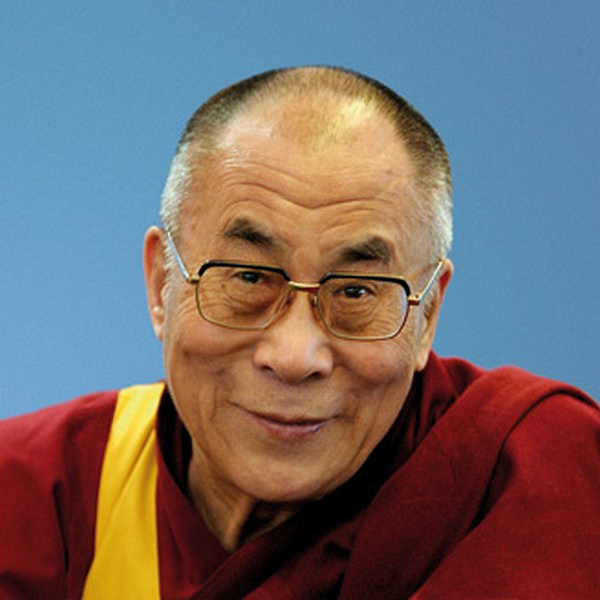
Other events connected to His Holiness visit to Estonia
http://www.dalailama.ee/in-english/
(regularly updated)
......
Vabadus paguluses: XIV Dalai-Laama Tendzin Gjatso autobiograafia, Tema Pühadus Dalai-Laama, inglise keelest tõlkinud Kai Vassiljeva, 240 lk, Elmatar 1999.
Kunst olla õnnelik: Elamisõpetus, Cutler, Howard C. ja Tema Pühadus Dalai-laama, inglise keelest tõlkinud Mae Hallistvee, 278 lk, K-Kirjastus 2000.
Iidne tarkus, moodne maailm: Uue aastatuhande eetika, Tema Pühadus Dalai-laama, inglise keelest tõlkinud Kai Vassiljeva, 144 lk, Elmatar 2001.
Avali süda: Kaastunne igapäevaelus, Tema Pühadus Dalai-laama, koostanud Nicholas Vreeland, inglise keelest tõlkinud Häli Kummel, 199 lk, Pegasus 2003, 2008.
XIV dalai-laama tarkuseõpetused, Matthew E. Bunson, inglise keelest tõlkinud Aime Kons, 267 lk, Pegasus 2004.
Kunst olla tööl õnnelik, Howard C. Cutler ja Tema Pühadus Dalai-laama, inglise keelest tõlkinud Kai Vassiljeva, 247 lk, Pegasus 2005.
Kuidas anda elule mõte, Tema Pühadus Dalai-laama, koostanud Jeffrey Hopkins, inglise keelest tõlkinud Teet Toome, 176 lk, Tänapäev 2005.
Tervendavad emotsioonid: Vestlused Dalai-Laamaga emotsioonidest, meelest ja tervisest, Tema Pühadus Dalai-laama, koostanud Daniel Goleman, inglise keelest tõlkinud Aime Kons, 304 lk, Pegasus 2006.
Tema Pühadus Dalai-Laama: Elulugu intervjuudes, Gerald S. Strober ja Deborah Hart Strober, inglise keelest tõlkinud Henn Käämbre, 300 lk, Pegasus 2007.
Kuidas näha enda tõelist olemust, Tema Pühadus Dalai-laama, koostanud Jeffrey Hopkins, inglise keelest tõlkinud Lauri Liiders, 240 lk, Tänapäev 2008.
Juhi tee, Laurens van den Muyzenberg ja Tema Pühadus dalai-laama, inglise keelest tõlkinud Mario Pulver, 224 lk, Tänapäev 2009.
Virgumine, Tema Pühadus dalai-laama, koostanud Jeffrey Hopkins, inglise keelest tõlkinud Ehte Puhang, 312 lk, Tänapäev 2010.
Hävitavad emotsioonid: teadlaste vestlus dalai-laamaga, Tema Pühadus dalai-laama, koostanud Daniel Goleman, inglise keelest tõlkinud Giia Weigel, 432 lk, Pegasus 2011.
Nukrad armastuslaulud, Tsangjang Gjatso, tiibeti keelest tõlkinud Linnart Mäll, 110 lk, Lux Orientis 2006.
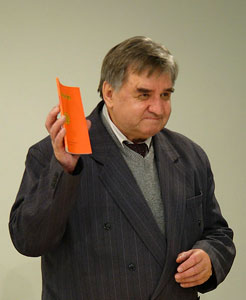
Linnart Mäll (7 June 1938 – 14 February 2010)
Born in Tallinn, Estonia, Dr. Mäll graduated from the Tartu State University in 1962 with a major in general history. He followed graduation with postgraduate studies at the Institute for Oriental Studies at the Academy of Sciences of USSR (1964-1966) and Department of History, Tartu State University (1966-1969); 1985 Cand. Hist. (Ph.D.) in history, Ph.D. thesis "Ashtasāhasrikā Prajñāpāramitā as a Historical Source". Dr. Mäll died of cancer in Tartu, 2010.14.02.
His main research fields included: Buddhist Mahāyāna texts, Buddhist mythology, classical Indian literature and culture, classical Chinese texts, Tibetan Buddhist texts and the history and rights of small nations and peoples.
He was one of the first who applied the methods of semiotic analysis for investigation of Buddhist texts and other texts of classical Oriental thought. Mäll was one of the central figures of the branch of oriental studies in the Tartu-Moscow school of semiotics in 1960-70s. In the 1990s Mäll worked on the elaboration of the conception of humanistic base texts. Since 1994 he has been the Head of the Centre for Oriental Studies, at the University of Tartu. He later served as head of the Laboratory for Oriental Studies (1991-1994). In 1998 he expanded his work on humanistic based texts and he was the initiator and head of the research project "Humanistic base texts in the history of mankind". Mäll was also an author of ten books and over one hundred academic articles on the subject.
Mäll was inspired to become a Buddhist and buddhologist by well-known Estonian theologian and philosopher Uku Masing in the early 1960s. He later studied under and worked together with several Buddhist and non-Buddhist teachers and scholars including Nikolai Konrad, Alexander Piatigorsky, Oktiabrina Volkova, Youri Parfionovich, Lev Menshikov and Lama Bidia Dandaron. He was a teacher and spiritual master for many Estonian buddhists and orientalists. In the 1990s he established close ties with His Holiness The Dalai Lama and served as the main organizer of both of the visits of His Holiness in Estonia (1991 and 2001).
Mäll was the founder and president of the Mahāyāna Institute (from 1991-1994, in Tartu), and president of the Estonian Buddhist Institute (from 2002 in Tallinn).
He was awarded the Order of the White Star, IV degree in 2001 and other awards.
His membership in the academic associations is as follows:

Estonian Institute of Buddhism (MTÜ Budismi Instituut); registration code: 80157537
phone: +372 51 013 87; e-mail info@budismiinstituut.ee
Tallinn, Estonia; bank account no. EE982200221018598037
in Swedbank